Recognise possibility.
Ask what matters to the young person. Use their interests and ambitions to choose a goal they want to work towards.
 SPECIALIST ENGAGEMENTEnquire
The methodology behind the work
We start by listening to what life feels like for the young person and what the people around them have already tried. We look for the interests, abilities and hopes they can build on. As trust grows, the young person and mentor can turn one of those strengths into a practical next step.
Explore support for your situationStart with strengths.
Build towards possibility.
Our established model
Strengths. Potential.
Trusted relationships.
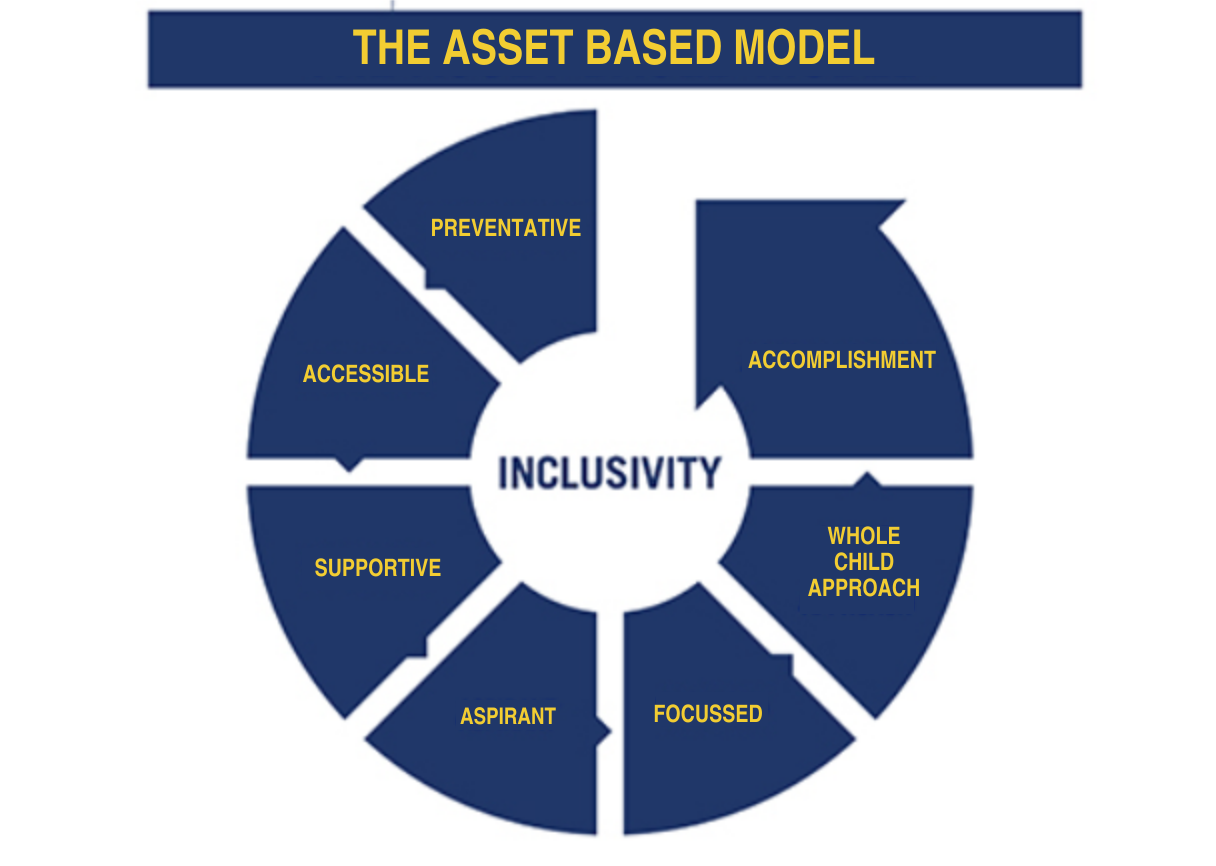
The model behind the relationship. View the larger diagram (opens a new tab)
We build connection early, helping children recognise their strengths and address barriers before difficulties deepen. Where disengagement has already taken hold, we work towards rebuilding trust and participation.
We help children set meaningful, achievable goals and recognise the steps they take towards them. Noticing progress gives them evidence of what they can do and a reason to keep going.
We see the person behind the behaviour. We consider a child’s identity, feelings, relationships, interests and circumstances, and connect with family, school and other professionals where appropriate.
Every mentoring relationship has a purpose. We agree priorities with the young person and those commissioning the support, then use practical actions and regular reviews to guide the work.
We help children imagine a future they want to move towards. Their interests, strengths and ambitions become a starting point for exploring possibilities and choosing their next steps.
We offer a consistent, encouraging relationship where children can feel heard and valued. We combine care with constructive challenge, helping them work through setbacks and build confidence in their own abilities.
We take time to understand what helps each child engage, including their communication needs, interests and starting point. We agree an approach and delivery arrangements that make participation more achievable.
View the original methodology graphic
Ask what matters to the young person. Use their interests and ambitions to choose a goal they want to work towards.
Identify strengths they can use now. Recognise specific steps forward and review confidence through their voice and the observations available.
Turn conversations into agreed actions. Review participation and progress with the young person, connecting with family and professionals where appropriate.
Aspire. Believe. Mentor. The principles that connect strengths with practical progress.
Engagement around the young person
Our Asset-Based Model underpins every strand: work with the child, with parents and family, and with the schools and agencies already involved. Interests, strengths and aspirations give us the hook; the engagement plan connects the work.

Direct support begins with what matters to them.
Understand barriers, strengthen communication and agree how to support progress at home.
Coordinate practical steps into learning and review participation with the setting.
Agree responsibilities, share relevant observations and review actions together.
The engagement plan sets out the contribution of each strand, with a named liaison and progress reviews. Family testimony, the Sandwell Children Missing Education (CME) recommendation and the COBS case studies illustrate the approach.
Read the Children Missing Education (CME) recommendation · Read the COBS cases
This account has moved to Impact
Our Theory of Change
How does a relationship become a way forward? Explore the connections between the child’s strengths, purposeful engagement, observable change and the question of what lasts.
The methodology beneath the relationship.01 / Strengths and possibility
Listen to the young person’s interests, ambitions and experience. Understand the barriers alongside the capabilities they already bring. Agree a starting point with the child and the people supporting them.
02 / Trust and participation
Consistent contact creates opportunities to feel heard, take part and practise constructive choices. Work with parents, family and professionals helps connect the relationship to everyday life.
Source: Sandwell Children Missing Education recommendation. A professional account of the young people supported.
03 / Observable change
Look for progress in relationships, emotional regulation, participation in learning and family confidence. Bring the young person’s account together with attributed observations and available records.
Source: Student AH case study. An individual comparison, with its own context and limits.
04 / Longer-term ambition
Former mentees describe influence that remains part of their story decades later. Their accounts give a long view. Consistent follow-up is needed to understand how outcomes last across the wider service.
Individual retrospective accounts from Herman’s mentoring history. These inform the model; they do not establish outcomes for every ECNM programme.
How the work is substantiated
Their experience, voice and account of change.
Attributed observations from family and professionals.
Available measures, dates and the context behind them.
We bring these perspectives together where available and identify the gaps. Each case study shows the evidence it contains.
Consistency, safety, family and professional support, and access to real opportunities influence the pathway. Change can be gradual, uneven or interrupted. Reviews help adapt the support.
See how progress is recorded and reviewed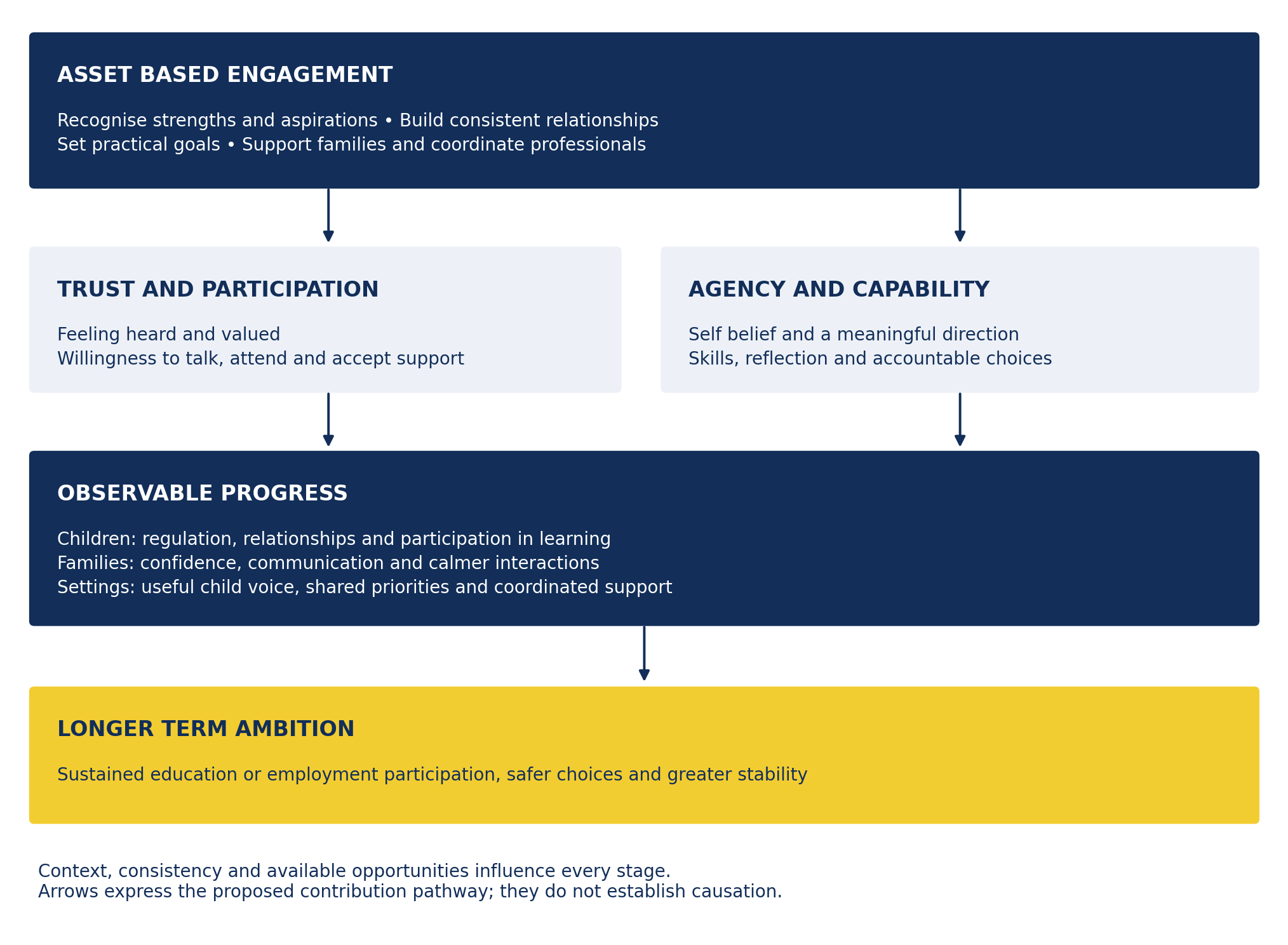
View full-size diagram · Download the full Theory of Change · Word ↓ · Explore the original evidence
Your next step
Explore how Asset-Based Mentoring could support the children and families you work with.